
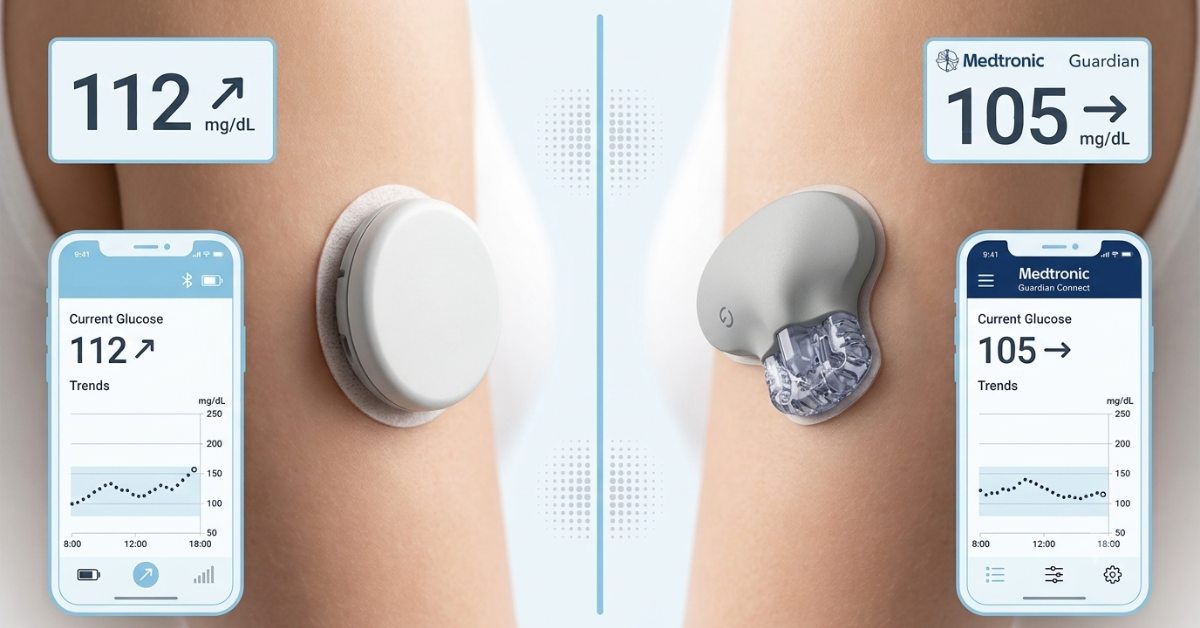
Choosing a continuous glucose monitor is not just a medical decision, it is a daily lifestyle decision. If you are comparing FreeStyle Libre vs Medtronic Guardian, you are likely trying to figure out which sensor will cause less friction in your routine while still keeping your glucose numbers in check. Both systems come from established manufacturers, both are FDA cleared, and both promise to reduce fingersticks. But the similarities mostly end there.
This guide breaks down FreeStyle Libre vs Medtronic Guardian across accuracy, wear time, calibration needs, insurance access, and real cost, so you can make a decision based on facts rather than marketing copy.
Why This Comparison Matters More in 2026
Glucose monitoring technology has moved fast over the last few years. What used to require blood draws and lab visits can now be tracked from a sensor the size of a coin. As the latest blood sugar monitoring device options multiply, patients are no longer choosing between "a CGM or nothing."
They are choosing between systems with very different philosophies. Abbott's Libre line leans toward simplicity and affordability. Medtronic's Guardian line leans toward integration with insulin pumps for people managing more complex insulin regimens. Understanding that difference upfront saves a lot of trial and error later.
How FreeStyle Libre 3 Plus Works
Before comparing the two brands directly, it helps to understand the mechanics of the newer Libre sensor. So, how FreeStyle Libre 3 Plus work? The sensor sits on the back of the upper arm and uses a small filament inserted just under the skin to measure glucose in the interstitial fluid, not the blood itself. That reading updates automatically every minute and streams straight to a smartphone app or reader, with no scanning step required like older Libre models.
One of its biggest selling points is the freestyle libre 15 day wear time, which is longer than most competing sensors and means fewer insertions per month. The freestyle libre 3 plus sensor also skips routine fingerstick calibration for most users, which is a major quality of life improvement for people who dislike needles.
How Medtronic Guardian Works
Medtronic's Guardian 4 sensor also measures interstitial glucose but is built primarily to pair with Medtronic insulin pumps, particularly the MiniMed 780G system, to enable automated insulin delivery. It has a shorter wear cycle of about seven days and, unlike the current Libre 3 Plus, it still requires periodic fingerstick calibration to stay accurate. For patients on multiple daily injections without a pump, the Guardian ecosystem can feel like more setup than necessary. For patients already on a Medtronic pump, though, the tight integration is arguably unmatched.
FreeStyle Libre vs Medtronic Guardian: Side by Side Comparison
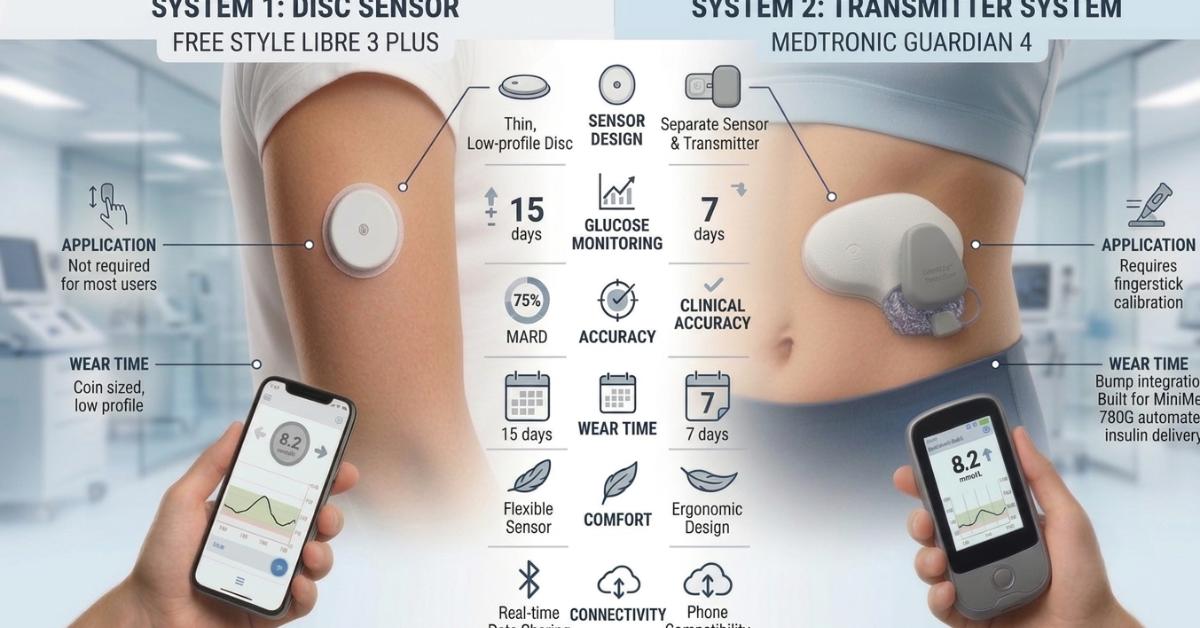
The table below summarizes the core differences pulled directly from manufacturer and regulatory documentation, so you have a reference point beyond opinion.
| Feature | FreeStyle Libre 3 Plus | Medtronic Guardian 4 |
|---|---|---|
| Sensor wear time | 15 days | 7 days |
| Calibration | Not required for most users | Requires fingerstick calibration |
| Sensor size | Coin sized, low profile | Slightly larger, adhesive patch |
| Pump integration | Limited direct pump integration | Built for MiniMed 780G automated insulin delivery |
| FDA clearance | FDA cleared, integrated CGM system | FDA cleared for use with compatible pumps |
| Manufacturer resource | Abbott FreeStyle Libre 3 Plus overview | Medtronic Guardian sensor overview |
| Medicare coverage pathway | CMS DME coverage criteria | CMS DME coverage criteria |
This table is a useful starting point, but insurance approval and out of pocket cost usually decide which sensor a patient ends up wearing long term.
Insurance Eligibility for FreeStyle Libre and Medtronic Coverage
Insurance eligibility for FreeStyle Libre has expanded significantly over the past two years, and most major private insurers along with Medicare Part B now cover it for people with type 1 diabetes and many people with type 2 diabetes who use insulin. Coverage criteria typically require documented insulin use and a prescription confirming frequent glucose testing needs.
Medtronic Guardian coverage follows a similar Medicare and private insurance pathway, but because it is usually bundled with a compatible insulin pump, approval can involve an extra layer of paperwork tied to the pump itself. In practice, this means Libre tends to have a faster and simpler approval process for patients who are not on a Medtronic pump, while Guardian makes more sense financially only if a pump is already part of the treatment plan.
Licensed DME supplier. We verify your insurance before your first order and ship fast across all 50 US states.
How to Get FreeStyle Libre 3 Plus Online
If you already know FreeStyle Libre 3 Plus is the right fit, the ordering process is straightforward. Most patients ask how to get FreeStyle Libre 3 Plus online once their doctor confirms eligibility. The general path looks like this. First, get a prescription from your physician specifying the Libre 3 Plus sensor and reader or compatible smartphone app. Second, submit that prescription through a licensed online pharmacy or your insurance's preferred mail order supplier.
Third, confirm your insurance eligibility for FreeStyle Libre coverage details, including copay amount and refill frequency, before the first shipment goes out. Reputable licensed pharmacies will also flag pricing transparently before you commit to an order, which is worth confirming since pharmacy pricing can vary.
Which Is Better, FreeStyle Libre or Dexcom?
Since Dexcom is the third major player in this space, it is worth a brief detour. So which is better, FreeStyle Libre or Dexcom? Dexcom G7 offers real time alerts and slightly more aggressive integration with third party apps and automated insulin delivery systems, similar in spirit to what Medtronic Guardian offers with its own pumps. FreeStyle Libre 3 Plus, by comparison, wins on wear time and simplicity, with fifteen days of wear against Dexcom's ten. Neither is universally "better." The right answer depends on whether alert customization or longer wear time matters more to your daily routine.
Real World Verdict: FreeStyle Libre vs Medtronic Guardian for Different Users
For someone newly diagnosed and not yet on an insulin pump, FreeStyle Libre vs Medtronic Guardian usually resolves in Libre's favor, mainly because of the longer sensor life and no calibration requirement. For someone already committed to the Medtronic pump ecosystem and chasing tighter closed loop automation, Guardian remains the more logical companion device despite the shorter wear cycle. This is really the crux of the FreeStyle Libre vs Medtronic Guardian decision: it is less about which sensor is objectively superior and more about which ecosystem your treatment plan already lives in.
There is no single winner in the FreeStyle Libre vs Medtronic Guardian debate. Libre 3 Plus is the simpler, longer lasting, calibration free option that suits most people managing diabetes without a pump. Guardian earns its place for patients deep in the Medtronic pump ecosystem who need that tight automated insulin delivery loop. Whichever direction you lean, confirm insurance eligibility for FreeStyle Libre or your Guardian coverage terms before committing, since that single step usually has more impact on your final decision than any spec sheet comparison.
This article is for general informational purposes and does not replace medical advice. Always consult a licensed healthcare provider before choosing or switching any continuous glucose monitoring device.