
If you have spent even ten minutes in a diabetes forum, you already know the FreeStyle Libre vs Dexcom debate never really ends. Both brands promise fewer finger pricks, better glucose trends, and more freedom, but they go about it in different ways. This guide breaks down the FreeStyle Libre vs Dexcom comparison the way a person managing blood sugar every single day would want it explained, not the way a spec sheet does.
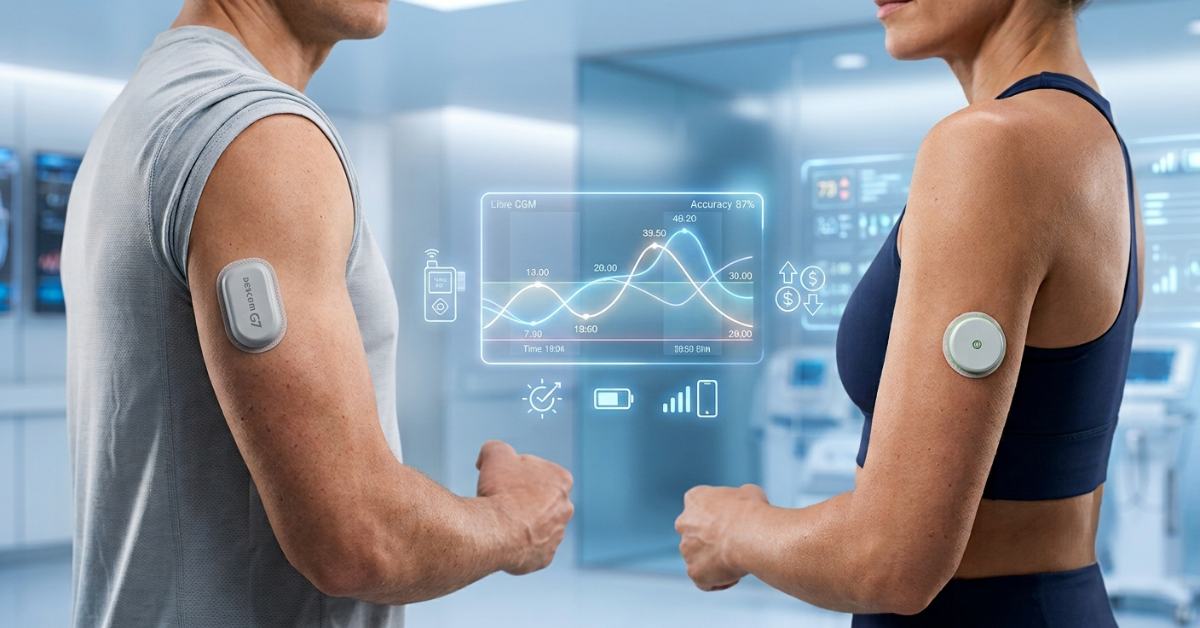
Whether you are a newly diagnosed type 1, a busy parent tracking a child's numbers, or an athlete chasing stable energy through a workout, the choice between these two systems affects daily life far more than most people expect before they start wearing one.
FreeStyle Libre vs Dexcom: The Core Difference Nobody Explains Simply
Both are a continuous glucose monitor, meaning a small sensor sits under the skin and reads glucose from interstitial fluid every few minutes instead of making you prick a finger. That part is where the similarity mostly ends.
FreeStyle Libre, made by Abbott, built its reputation on simplicity and affordability. Dexcom leaned into real time alerts and tighter pump integration. When people type which is better FreeStyle Libre or Dexcom into a search bar, the answer depends on whether you value low cost and ease of use, or aggressive alarms and pump connectivity. Neither brand wins for every user, which is why this FreeStyle Libre vs Dexcom comparison looks at real usage patterns rather than marketing claims.
Dexcom G7 vs FreeStyle Libre 3: Accuracy, Wear Time and Comfort
The current generation matchup is really a Dexcom G7 vs FreeStyle Libre 3 conversation, since both companies retired their older models for most new users.
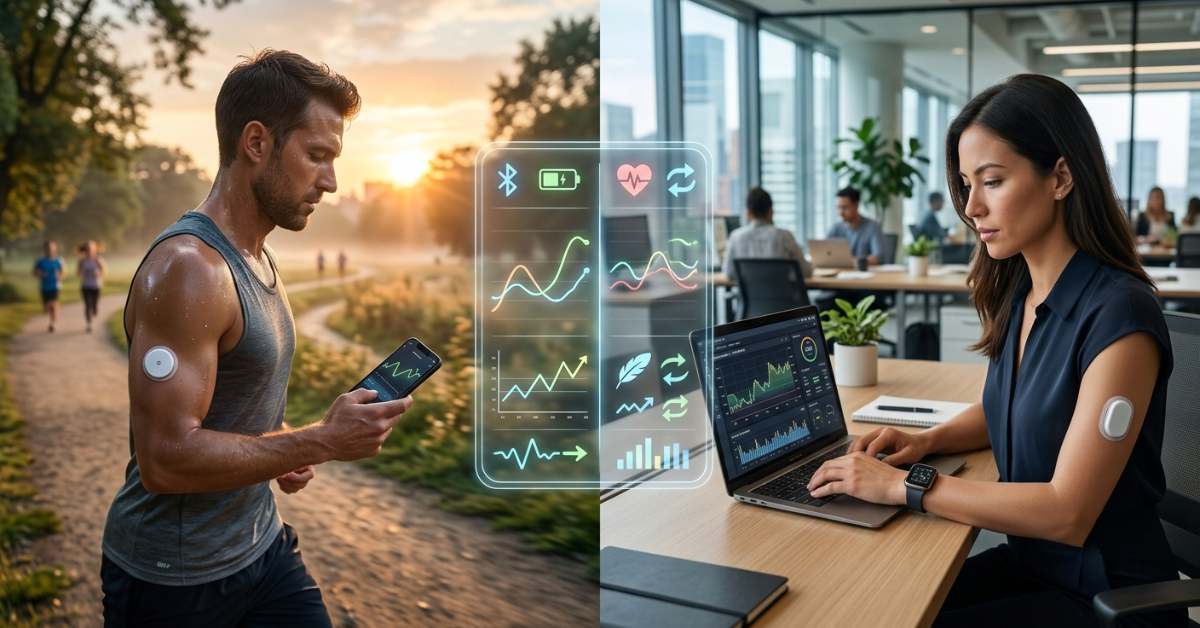
Dexcom G7 has a stated mean absolute relative difference (MARD) around 8 percent, according to Dexcom's own clinical data, and it sends readings straight to a phone or receiver every five minutes without needing a separate scan. FreeStyle Libre 3 reports a similar MARD in the high single digits and also streams continuously now, closing the gap that used to separate the two brands.
Wear time still favors Libre slightly. The libre 3 plus sensor lasts up to 15 days, while Dexcom G7 sensors are approved for 10 days. For someone who dislikes frequent site changes, that adds up to real savings in time and skin irritation over a year. On comfort, both sensors sit flatter than earlier generations, though forums consistently mention Libre's applicator as gentler on first use. This wear time gap alone settles which is better FreeStyle Libre or Dexcom for a lot of budget conscious users.
FreeStyle Libre 3 Plus Explained: What Makes the Newest Sensor Different
To understand freestyle libre 3 plus explained properly, know what changed from the original Libre 3. The Plus version extends sensor life to 15 days, improves accuracy in the first 24 hours of wear, and keeps the same coin sized profile. It sends data every minute to a compatible smartphone app, so alarms for highs and lows arrive without a manual scan.
This matters in the FreeStyle Libre vs Dexcom comparison because earlier Libre models required scanning the sensor to pull data, a step Dexcom never needed. The Plus sensor removes that gap entirely, which is one reason Abbott has gained ground against Dexcom's alert heavy system in recent years.
Comparison Table: FreeStyle Libre vs Dexcom at a Glance
| Feature | FreeStyle Libre 3 Plus | Dexcom G7 |
|---|---|---|
| Sensor wear time | Up to 15 days | Up to 10 days |
| Data transmission | Continuous, every minute | Continuous, every 5 minutes |
| Reported MARD | Around 7.9 percent | Around 8.2 percent |
| Warm up time | 1 hour | 30 minutes |
| Smartwatch support | Limited, expanding | Broader Apple Watch support |
| FDA clearance | FDA cleared | FDA cleared |
| Pump integration | Growing list of partners | Well established with Tandem and Omnipod |
Accuracy and clearance figures above come from manufacturer clinical summaries and the FDA's CGM overview page.
Is FreeStyle Libre Good for Athletes? What Changes During Exercise
Athletes ask this question constantly, and the answer in this FreeStyle Libre vs Dexcom comparison is nuanced. Is FreeStyle Libre good for athletes depends heavily on sweat tolerance and adhesive strength during long training sessions. Libre sensors are known for staying put through swimming and heavy sweating, partly because the applicator seats the sensor lower and flatter against skin.
Dexcom G7 also holds up well during exercise, but some users report the adhesive edges lifting during multi hour endurance events like marathons or triathlons unless reinforced with an overpatch. For interval training, HIIT, or gym sessions under two hours, either device performs reliably, so this part of the FreeStyle Libre vs Dexcom decision often comes down to which alarm system an athlete finds less distracting mid workout.
For runners and cyclists specifically, the Dexcom G7 vs FreeStyle Libre 3 comparison tilts toward whichever sensor sits flatter under a compression sleeve, since sensors that snag on fabric are more likely to peel early. Coaches working with diabetic athletes often recommend testing both brands for a full training cycle before deciding, because sweat composition and skin type vary enough that a single review rarely applies to everyone.
Licensed DME supplier. We verify your insurance before your first order and ship fast across all 50 US states.
Insurance, Cost and Medicare: What You Actually Pay
This is where the FreeStyle Libre vs Dexcom comparison gets financial, and financial details change fast, so always confirm directly with your plan before ordering.
freestyle libre 3 plus insurance coverage has expanded since Abbott secured broader formulary placement with major PBMs in the last two years. Most commercial plans now place Libre 3 Plus on a preferred tier, often with lower copays than Dexcom G7 for similar coverage, which shifts the best CGM Dexcom or FreeStyle Libre answer for cost sensitive shoppers toward Libre.
Will Medicare pay for FreeStyle Libre 3 Plus is one of the most searched questions in this category, and the answer is generally yes under Medicare Part B, provided a treating physician documents medical necessity, typically insulin use or a history of hypoglycemia. Medicare's CGM coverage rules apply the same standard to Dexcom G7, so neither brand has an advantage on paper. CMS outlines the exact durable medical equipment criteria on its official coverage database.
How to Order FreeStyle Libre 3 Plus Online Safely
With a confirmed prescription, you can order FreeStyle Libre 3 Plus online through Abbott's official store, a licensed pharmacy partner, or your insurer's preferred mail order supplier. Avoid unverified third party sellers, since CGM sensors are temperature sensitive medical devices, not shelf stable gadgets, and a licensed supplier will also handle prior authorization paperwork automatically in most cases.
Dexcom vs Libre CGM: Which One Fits Your Life
At the end of the day, the Dexcom vs Libre CGM decision rarely comes down to a single winner. Best CGM Dexcom or FreeStyle Libre really depends on three personal factors: how long you want between sensor changes, how much you rely on smartwatch alerts, and what your specific insurance plan reimburses at the lowest cost.
People who want the longest wear time and lowest daily cost tend to lean Libre. People who want tighter pump integration and broader smartwatch support tend to lean Dexcom. Both brands are FDA cleared, both are backed by peer reviewed accuracy studies, and both have improved dramatically since their first generation launches. Ask any diabetes educator about Dexcom vs Libre CGM options and most will say the newer sensors from both companies have closed the gap so much that lifestyle fit now matters more than raw accuracy.
If you are still undecided after weighing this FreeStyle Libre vs Dexcom comparison, request a trial sensor of each through your endocrinologist before committing to a full prescription, since most clinics keep sample units for exactly this reason. That single week of side by side wear tends to answer the best CGM Dexcom or FreeStyle Libre question faster than any article can.
This article is for general informational purposes and does not replace medical advice. Always consult a licensed healthcare provider before choosing or switching any continuous glucose monitoring device.