
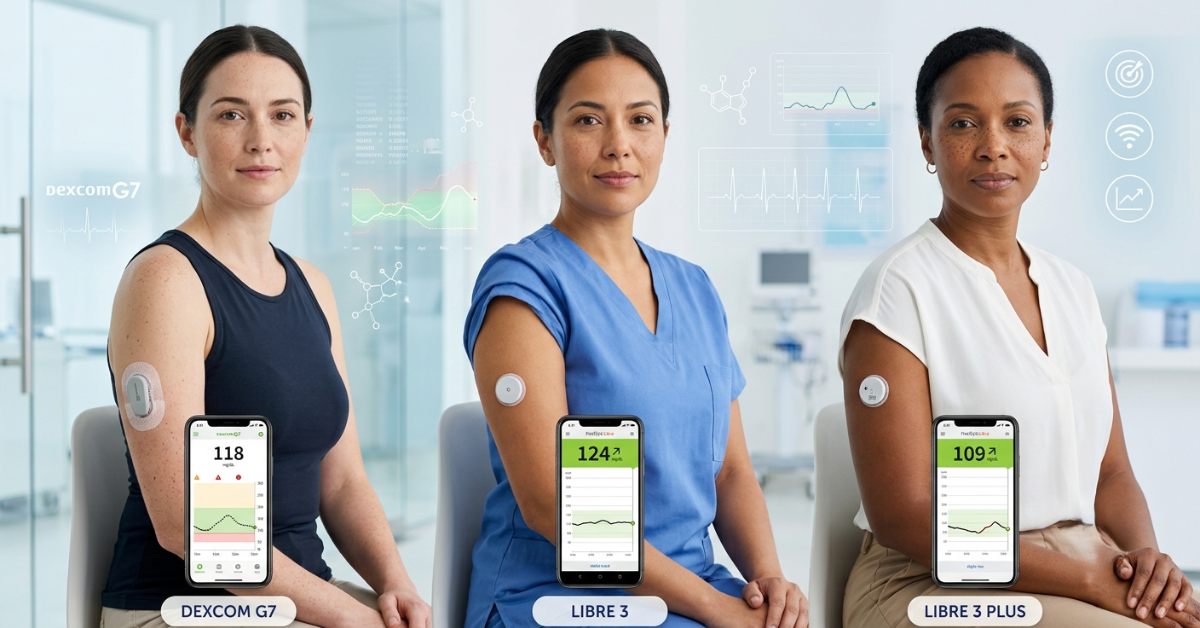
If you manage diabetes with insulin, picking a continuous glucose monitor is not just a shopping decision. It affects how well you sleep, how confident you feel behind the wheel, and how often you think about your blood sugar instead of living your life. Two names dominate this conversation right now: Dexcom G7 and FreeStyle Libre 3, along with its upgraded sibling, the Libre 3 Plus. This guide breaks down how they compare, what they cost, and how to get either one without draining your bank account.
What Is FreeStyle Libre 3 Plus, and Why Is Everyone Talking About It?
Before comparing the two brands, it helps to understand what freestyle libre 3 plus actually is. It is Abbott's newest sensor in the Libre lineup, built to stay on the body for up to 15 days, which is longer than the original Libre 3. It sends a glucose reading to your phone automatically every minute, with no scanning required, and it works with a compatible smartphone app or a dedicated freestyle libre 3 plus reader for people who prefer not to rely on their phone.
The Plus version was introduced as Abbott phased out the original Libre 2 and Libre 3 sensors, meaning most patients renewing prescriptions today are moved onto the Plus models by default.
The bigger picture is that this device sits inside a fast-moving category. Every few months brings a new latest blood sugar monitoring device claiming better accuracy or a smaller footprint, and Libre 3 Plus and Dexcom G7 are currently the two most talked about options in that race.
Dexcom G7 vs. FreeStyle Libre 3 and Libre 3 Plus CGM: The Real Differences
On paper, these two systems look similar. Both are factory calibrated, both skip routine fingersticks, and both connect to a smartphone app. The differences show up in daily use.
Dexcom G7 tends to warm up faster, typically around 30 minutes, and offers customizable high and low alerts along with pump integrations many insulin pump users rely on. Independent clinical comparisons show Dexcom's arm based accuracy trials report a MARD near 8.2 percent, a statistic measuring how close sensor readings are to actual blood values. Libre 3 sensors report similarly tight accuracy in Abbott's own trials, and the Libre 3 Plus takes more readings per day, once every minute versus Dexcom's five minute intervals, which some users find gives a smoother trend line.
Where the two diverge most is sensor wear time and alarm behavior. Libre 3 Plus lasts up to 15 days per sensor, while Dexcom G7 is rated for 10 days, so Libre users typically replace sensors less often. Dexcom includes built in urgent low alarms by default, while Libre's alarms depend on how the app is configured. Neither system is universally better. The right choice comes down to what your insurance covers, how your skin tolerates adhesive over two weeks versus ten days, and whether your care team already has experience with one brand.
Comparison Table: Dexcom G7 vs. FreeStyle Libre 3 Plus at a Glance
| Feature | Dexcom G7 | FreeStyle Libre 3 Plus |
|---|---|---|
| Sensor wear time | Up to 10 days | Up to 15 days |
| Warm up time | About 30 minutes | About 60 minutes |
| Reading frequency | Every 5 minutes | Every 1 minute |
| Reported accuracy (MARD) | Around 8.2 percent | Sub 8 percent in Abbott trials |
| Default alarms | Customizable, on by default | Optional, user configured |
| Medicare coverage | Covered under Part B for eligible patients | Covered under Part B for eligible patients |
| Manufacturer reference | Dexcom official comparison | Abbott FreeStyle Libre support |
| Medicare policy source | CMS Local Coverage Determination L33822 | CMS Local Coverage Determination L33822 |
Freestyle Libre Insurance Coverage: What You Should Actually Expect

freestyle libre insurance coverage varies depending on whether you have commercial insurance, Medicaid, or Medicare. Most major commercial plans place CGMs under the durable medical equipment or pharmacy benefit, meaning your out of pocket cost depends heavily on your deductible and whether prior authorization is required. Many patients find that going through a specialty pharmacy or a DME supplier, rather than a retail pharmacy, results in a smoother approval process since these suppliers already know what documentation insurers expect.
If you are trying to get freestyle libre 3 plus through insurance, the first real step is a prescription from your provider confirming medical necessity, followed by documentation of your diabetes diagnosis and treatment plan. Suppliers that specialize in diabetes devices typically handle the back and forth with your insurer on your behalf, which saves patients from the most frustrating part of the process: chasing approval codes themselves.
Licensed DME supplier. We verify your insurance before your first order and ship fast across all 50 US states.
What Medicare Actually Pays For
A question we hear constantly is does Medicare cover Freestyle Libre 3 Plus, and the short answer is yes. Medicare Part B covers the Freestyle Libre 3 Plus sensor and reader for beneficiaries who meet specific criteria, since a CGM is classified as durable medical equipment rather than a prescription drug. To qualify, you generally need a diabetes diagnosis, a prescription from your treating provider, and documentation showing you use insulin or have a history of problematic hypoglycemia. Coverage was expanded in 2023 to include a broader group of patients, not only those on multiple daily insulin injections, which opened the door for many Type 2 patients who previously did not qualify.
Once your Part B deductible is met, Medicare typically pays 80 percent of the approved cost, and you cover the remaining 20 percent unless you have supplemental coverage like a Medigap plan. It is worth confirming your specific benefits directly with Medicare, since individual circumstances can affect the final numbers.
Ordering Sensors Without the Usual Headache
Ordering has gotten considerably easier than it was a few years ago. Here is a realistic step by step for how to order freestyle libre 3 plus online.
- Get a prescription from your doctor or endocrinologist that specifies the Libre 3 Plus sensor and reader.
- Choose a supplier, either a specialty pharmacy, a DME company, or a mail order diabetes supply service, and submit your prescription along with your insurance information.
- Let the supplier verify your benefits before you commit, since this step reveals your actual copay ahead of time rather than after the sensor ships.
- Track your shipment and set a reminder for reorder timing, since most suppliers require you to request refills rather than sending them automatically.
Many patients now skip the pharmacy counter entirely, which is part of why online ordering has become the default path for CGM refills.
FreeStyle Libre 3 Plus Cost Without Insurance
If you do not have coverage, freestyle libre 3 plus cost without insurance typically surprises new patients, often landing between $70 and $150 per sensor depending on pharmacy and region, with the reader sold separately. Compared to Dexcom G7's list price without insurance, which runs noticeably higher per month, Libre 3 Plus is generally the more budget friendly option for uninsured patients. Manufacturer savings cards and discount tools can meaningfully lower this number, so it is worth checking before paying full retail.
There is no single correct answer to Dexcom G7 vs. FreeStyle Libre 3 and Libre 3 Plus CGM. Dexcom G7 suits people who want built in alarms and pump integration, while Libre 3 Plus suits people who want longer sensor wear and a lower price without insurance. The smartest move is talking to your care team, checking your insurance plan, and confirming Medicare eligibility before committing to either system.
This article is for informational purposes only and does not replace medical advice. Speak with your healthcare provider about which CGM is right for your individual diabetes management plan.