
Checking your blood sugar with a fingerstick many times a day gets old fast. That is usually the moment people start googling a continuous glucose monitor, and the very next search is almost always about money. If you are trying to figure out the freestyle libre 3 plus cost without insurance before you commit to a prescription, you are not alone, and the number is more predictable than most healthcare pricing tends to be.
This guide breaks down the real retail price, what drives it up or down, how insurance and Medicare change the math, and how to order the device without getting surprised at the pharmacy counter.
What Is the FreeStyle Libre 3 Plus, Explained Simply
Before the pricing makes sense, it helps to know what you are actually paying for. Freestyle libre 3 plus explained in plain terms: it is Abbott's newest sensor in the Libre 3 lineup, worn on the back of the upper arm, that streams glucose readings to your phone every minute without a single fingerstick calibration. Unlike older glucose meters, there is no separate reader you have to buy in most cases, since the FreeStyle Libre 3 app on your phone does the job for free.
The sensor itself is the ongoing expense. Everything else, the app, the alarms, the trend arrows, comes bundled in at no extra charge once you own a sensor.
FreeStyle Libre 3 Plus Cost Without Insurance: The Real Numbers
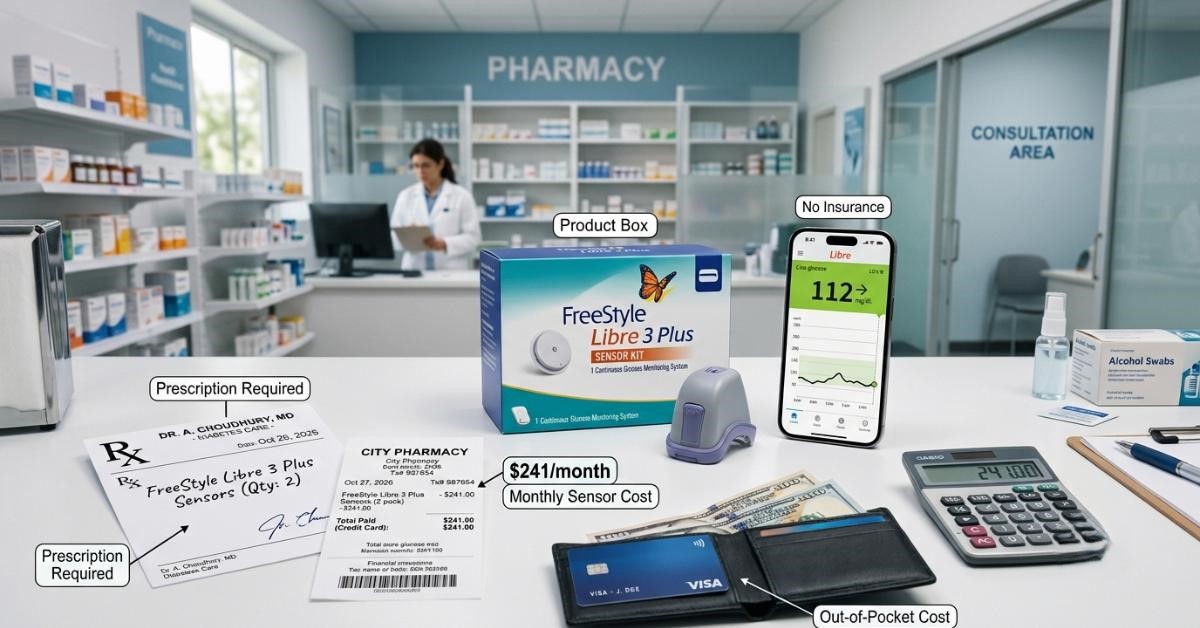
Here is the part everyone actually wants. The freestyle libre 3 plus cost without insurance sits at roughly 230 to 245 dollars for a box of two sensors, which is a 30 day supply since each sensor runs for a freestyle libre 15 day cycle before it needs replacing. That works out to close to 2,900 dollars a year if you pay full retail price with zero discounts.
That price is not fixed across the board though. Pharmacy chains set their own cash prices, and the gap between the cheapest and most expensive pharmacy in the same city can be 40 dollars or more per box. Discount cards, manufacturer copay programs, and even the choice of a mail order pharmacy versus a retail counter all move the freestyle libre 3 plus cost without insurance up or down.
| Source | Reported Price (2 sensors, 30 day supply) | Notes |
|---|---|---|
| SingleCare average cash price | $240.20 | Discount card can bring it to about $162 |
| GoodRx starting price | From $91.16 | Price varies heavily by pharmacy and coupon |
| Abbott MyFreeStyle copay program | $0 to $75 | For eligible commercially insured or uninsured patients |
| National retail average (multiple sources) | $233 to $241 | Roughly $2,900 per year at full price |
If you compare shopping strategies rather than accepting the first quote, the freestyle libre 3 plus cost without insurance can realistically be cut in half.
Licensed DME supplier. We verify your insurance before your first order and ship fast across all 50 US states.
Why the Freestyle Libre 15 Day Sensor Cycle Matters for Your Budget
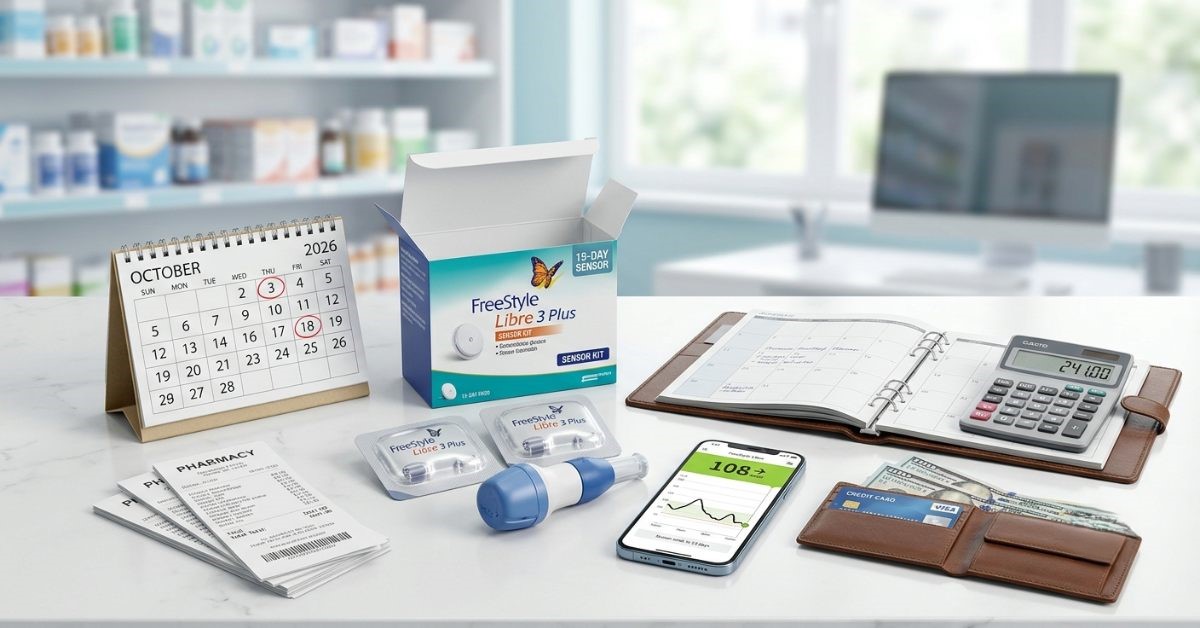
The freestyle libre 15 day wear time is longer than most competing sensors, and that detail changes your monthly math. A shorter wear cycle means more boxes purchased per year, which adds up fast even if the per box price looks similar on paper. Two sensors covering thirty days means fewer reorders, which makes it easier to time refills around a coupon reset and keeps the freestyle libre 3 plus cost without insurance more predictable month to month.
Insurance Coverage for FreeStyle Libre 3 Plus: What Changes When You Are Covered
Insurance coverage for freestyle libre 3 plus is common but not universal. Roughly 95 percent of private insurance plans in the US include some coverage for FreeStyle Libre systems, according to Abbott, though copay amounts, prior authorization rules, and preferred pharmacy networks vary by plan. Some commercial plans place the sensor under the pharmacy benefit, others under durable medical equipment, and that detail alone can change your out of pocket cost significantly. If a claim is denied or you switch jobs mid year, checking your HR benefits portal before refilling can save a frustrating pharmacy counter surprise.
Medicare Part B Coverage for FreeStyle Libre 3 Plus
Medicare part B coverage for freestyle libre 3 plus exists for beneficiaries who use insulin or have a documented history of problematic hypoglycemia. Since 2023, CMS expanded eligibility to roughly 1.5 million more people with diabetes, including many Type 2 patients on insulin. Under Medicare Part B, the device is classified as durable medical equipment rather than a pharmacy drug, so once the annual Part B deductible (283 dollars in 2026) is met, beneficiaries typically pay 20 percent coinsurance on the Medicare approved amount, with Medicare covering the remaining 80 percent.
Suppliers must be Medicare enrolled and the prescribing doctor must also participate in Medicare for the claim to process correctly. CMS Local Coverage Determination L33822 outlines the exact clinical criteria patients must meet.
Health Insurance for CGM: How Different Plan Types Compare
Health insurance for cgm devices generally falls into three buckets: commercial employer plans, Medicare, and Medicaid. Commercial plans tend to offer the fastest approval for Type 1, Type 2, or gestational diabetes. Medicaid coverage exists in most states but often requires prior authorization and proof of insulin use. If a claim is denied at any level, Abbott's savings program and discount cards remain a backup, which is why the freestyle libre 3 plus cost without insurance still matters even for insured patients stuck in a coverage gap.
CGM Starter Kit: What Comes in the Box
A cgm starter kit for the FreeStyle Libre 3 Plus typically includes two sensors, the applicator built into each sensor pack, and access to the free companion app. Some pharmacies bundle a reader device for patients who prefer not to rely on a smartphone, though this adds to the upfront price. First time users should confirm with their pharmacist whether the starter kit includes any training materials, since proper sensor placement affects both accuracy and how long the adhesive holds up during the full 15 day wear period.
FreeStyle Libre 3 Plus Installation Guide: Getting Your First Sensor On Right
The freestyle libre 3 plus installation guide from Abbott recommends applying the sensor to the back of the upper arm, avoiding scar tissue, moles, or areas close to the beltline. Clean the skin with an alcohol wipe and let it dry fully before applying, since any residual moisture weakens the adhesive. Press the applicator firmly against the skin and hold for a few seconds until you hear the click. Avoid submerging the sensor in water for the first 24 hours while the adhesive fully sets, and pair it with your phone app immediately so you are not troubleshooting connectivity issues later in the wear cycle.
How to Order FreeStyle Libre 3 Plus Online
You can order freestyle libre 3 plus online through your pharmacy's mail order portal, through Abbott's own ordering page for cash pay customers, or through telehealth services that bundle a prescription with home delivery. Ordering online often works out cheaper than a walk in pharmacy visit because mail order pharmacies frequently have lower dispensing fees baked into the cash price. Always confirm the pharmacy is licensed in your state and that the listing is for the genuine FreeStyle Libre 3 Plus sensor before entering payment details, since counterfeit listings on unverified marketplaces have circulated online.
The freestyle libre 3 plus cost without insurance is real, but it is not fixed. Between copay programs, discount cards, and comparing pharmacy prices before filling a prescription, most patients can bring the out of pocket number down substantially from the sticker price. If you have insurance, checking your specific plan's rules before ordering saves both money and time, and if you qualify for Medicare, understanding the Part B deductible and coinsurance structure ahead of your first order keeps the bill from catching you off guard.
This article is for informational purposes only and does not constitute medical advice. Always consult your physician or diabetes care team before starting any new glucose monitoring device or changing your diabetes management plan.